The Physics Layer For
Aerothermal
Test & Measurement

Problem

Engineering tests are expensive, yet they only provide a sparse and incomplete view of the system being tested. Sensors are limited in number, often intrusive, and measure only local quantities. Conventional data-acquisition systems collect and visualise these measurements, but leave the engineer to determine what the measurements mean: what is happening between sensors, whether a sensor has drifted, how conflicting measurements should be reconciled, and how certain any derived quantity actually is.

Solution

Hendon combines sparse measurements with governing physics to infer the full probabilistic state of the experiment — including quantities that were never measured. It generates a posterior distribution over the unmeasured flow field and derived quantities, while simultaneously identifying sensor drift, reconciling conflicting measurements, and quantifying uncertainty. It can also determine where an additional sensor would provide the greatest reduction in uncertainty.

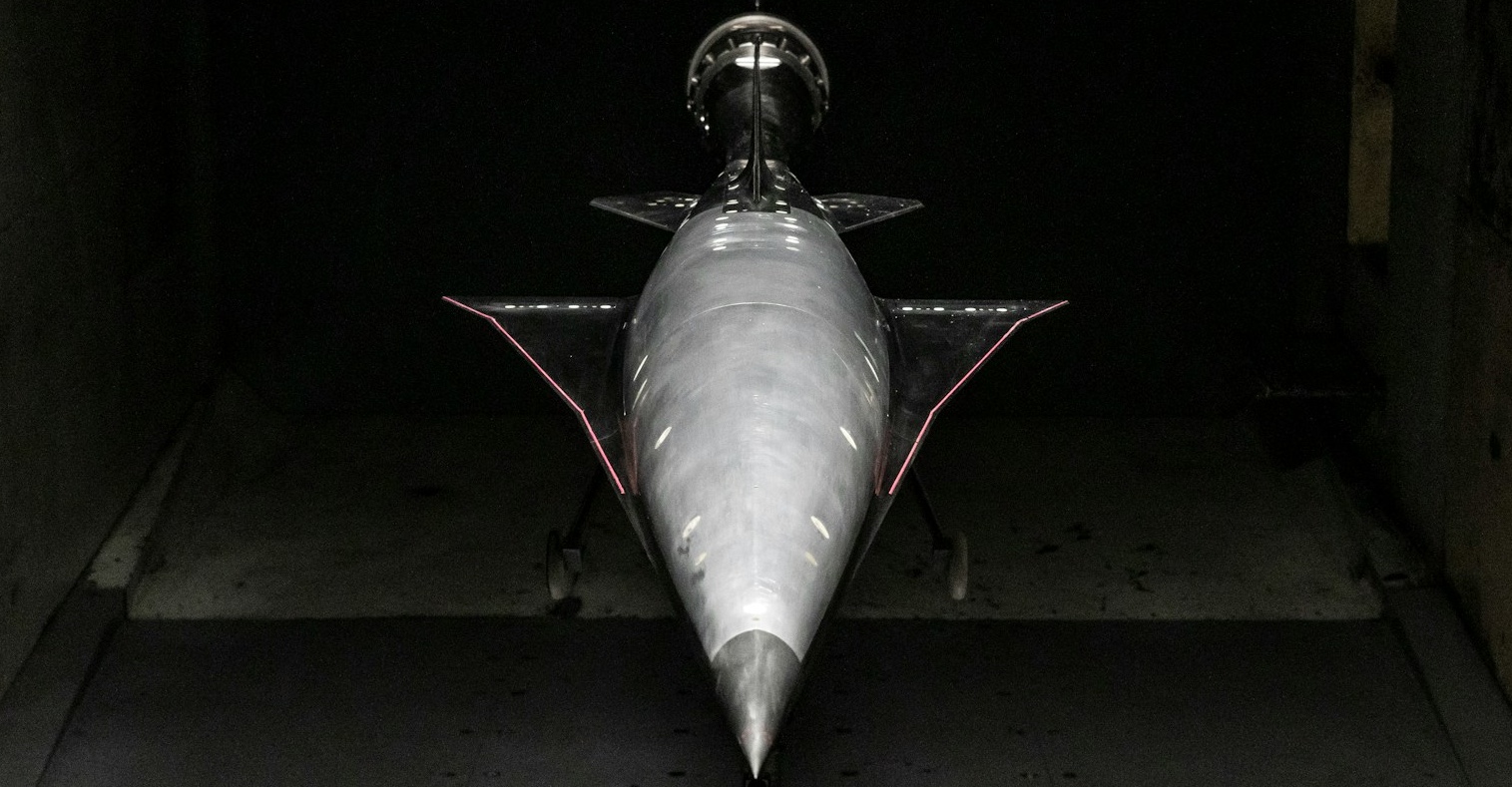
A slender high-speed vehicle model mounted on a sting in a wind-tunnel test section

What our product offers

Less testing.
Fewer sensors.
Better uncertainty.

01

Reduced number of measurements

Recover the same field from a fraction of the points — traverses and surveys that took hours collapse to minutes.

02

Reduced number of operating points

Cover the operating map without running every condition; the model fills in what you did not have time or budget to test.

03

Reduced number of expensive sensors

Infer what costly or intrusive instrumentation would have told you, and see where an extra sensor is genuinely worth the spend.

04

Improved physics-aware uncertainty analysis

Uncertainty budgets that respect the governing physics — not error bars bolted on after the fact.

FAQ

Common questions.

How does it work?

Given the geometry and where the sensors sit, Hendon builds a probabilistic, 2D/3D physics-based model of the asset — think of this as the prior. Your measurements then inform the posterior. The resulting model captures the physics both at the surface and in the far field and can be used for sensor placement guidance, anomaly and drift detection, and spatio-temporal flowfield averaging.

Which sensors is it compatible with?

Stagnation pressure (e.g., kiel) and temperature probes, static pressure taps, static temperature sensors, strain gauges, particle image velocimetry (PIV), and 6-DOF force and motion measurements — among others.

What has it been used on?
Fixed wings Infinite and finite wing configurations in wind tunnels, across the subsonic and transonic regimes.
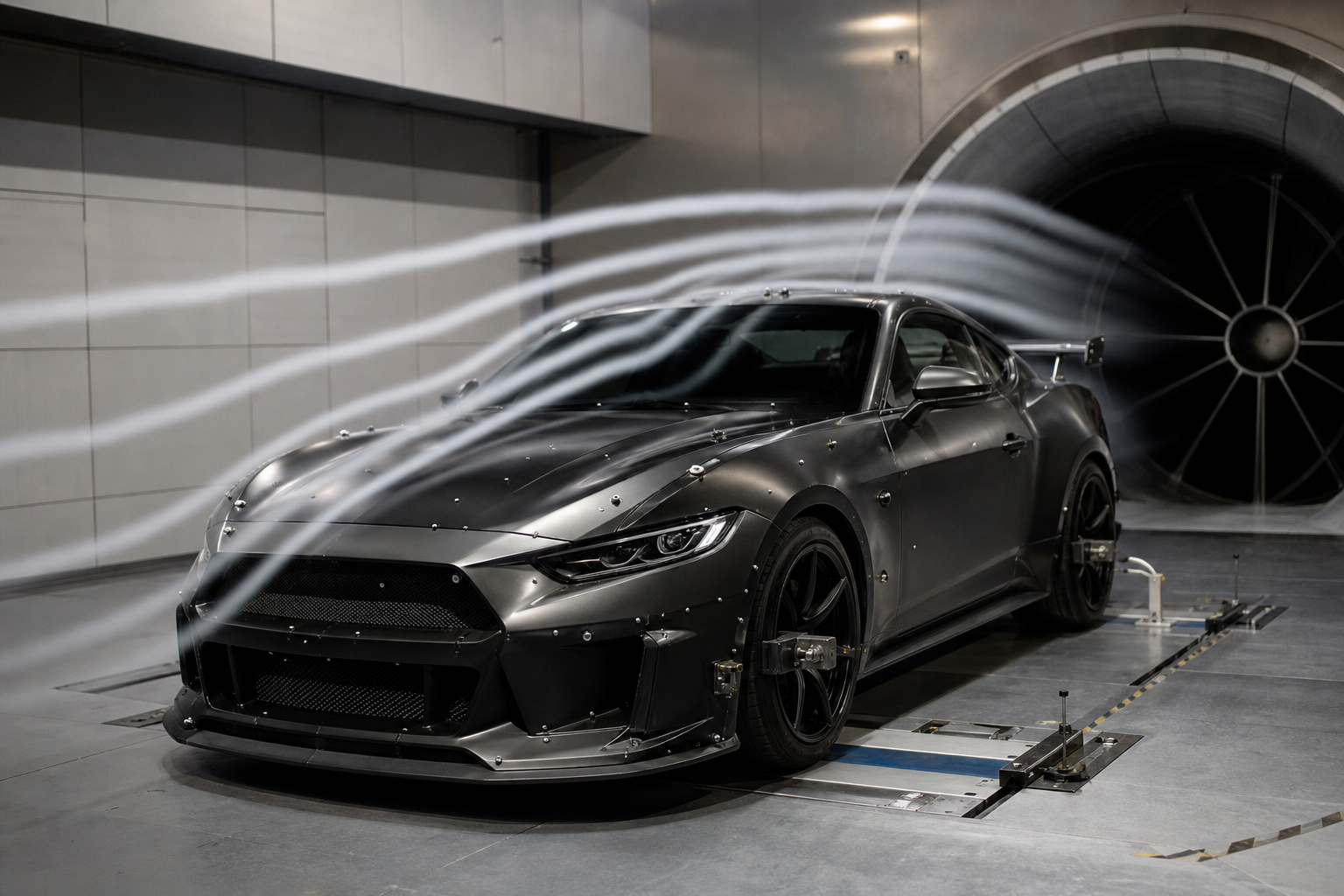
Automotive Full car geometries in the wind tunnel.
Turbomachinery Scaled compressor, turbine and combustor rigs, and axial and radial machines.

It works from primary in-situ measurements — pressures and temperatures along the surface or flow path — and can fold in secondary sensors such as force transducers. Several applications also draw on Hendon's view of quantities that can't be measured directly, like efficiency and lift-to-drag, to feed uncertainty budgets and compliance-reliability calculations.

Can it identify anomalies in post-test results?

Yes. In time-resolved results — data that hasn't been time-averaged — it identifies spatio-temporal anomalies. For time-averaged data, the software can identify spatial anomalies.

Can it handle unsteady flows?

Yes. The priors don't solve equations over a structured or unstructured grid, so the method stays fast — including for unsteady flows.

Can it work with streamed test-cell data?

Yes. Our engineers work with your team to ingest multi-sensor data straight from the test cell.

Latest

News & writing.

All news & writing